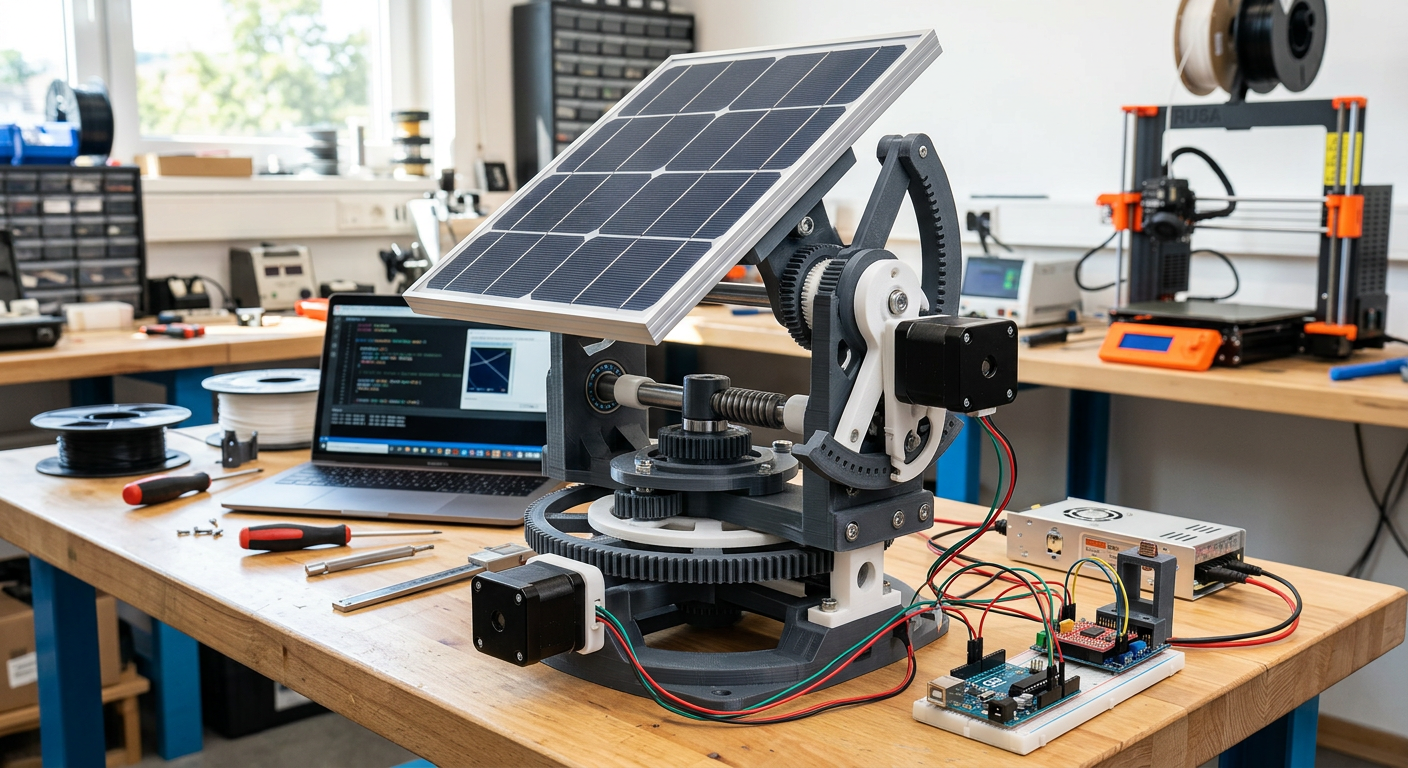
Panel Mounting Structures
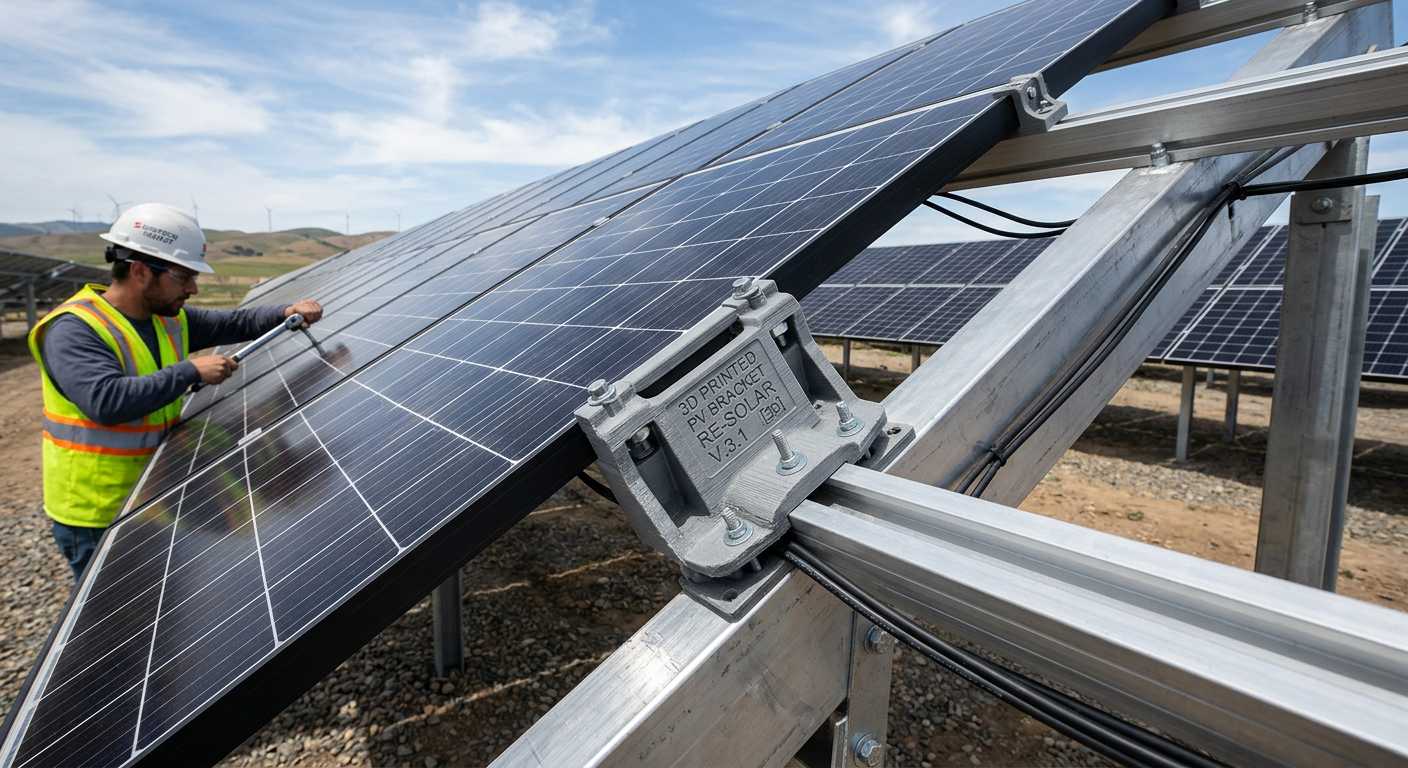
Standard solar racking is designed for standard roofs. Curved roof surfaces, non-standard tilt angles, and architectural installations require custom geometry that additive manufacturing can produce in days rather than the weeks or months of fabricated steel. 3D printed mounting components — clamps, rail connectors, tilt brackets, and ballast trays — are produced in UV-stabilized ASA or SLS nylon for polymer components, and DMLS aluminum (AlSi10Mg) for structural hardware that must carry wind and snow loads. All structural parts are engineered to IEC 61215 mechanical load standards.
Concentrated Solar Geometry
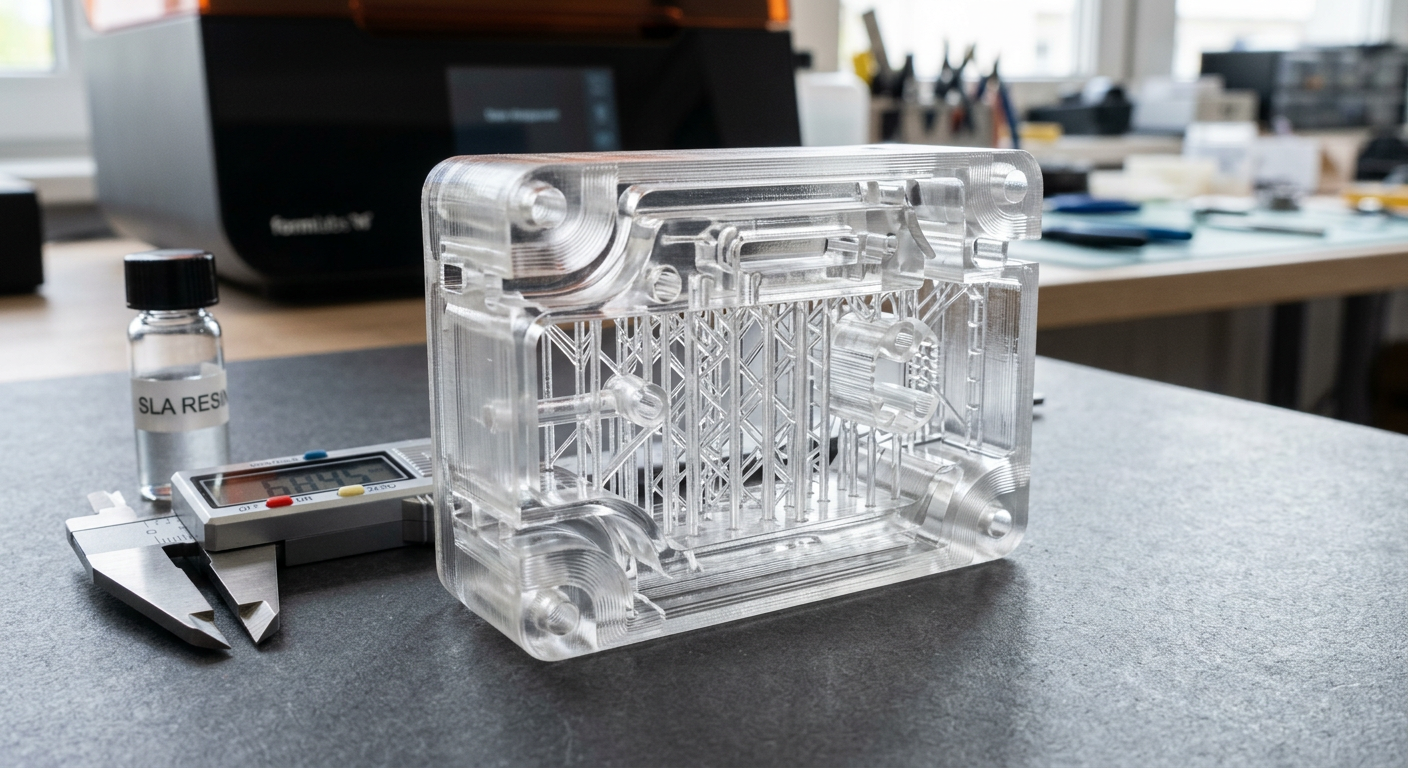
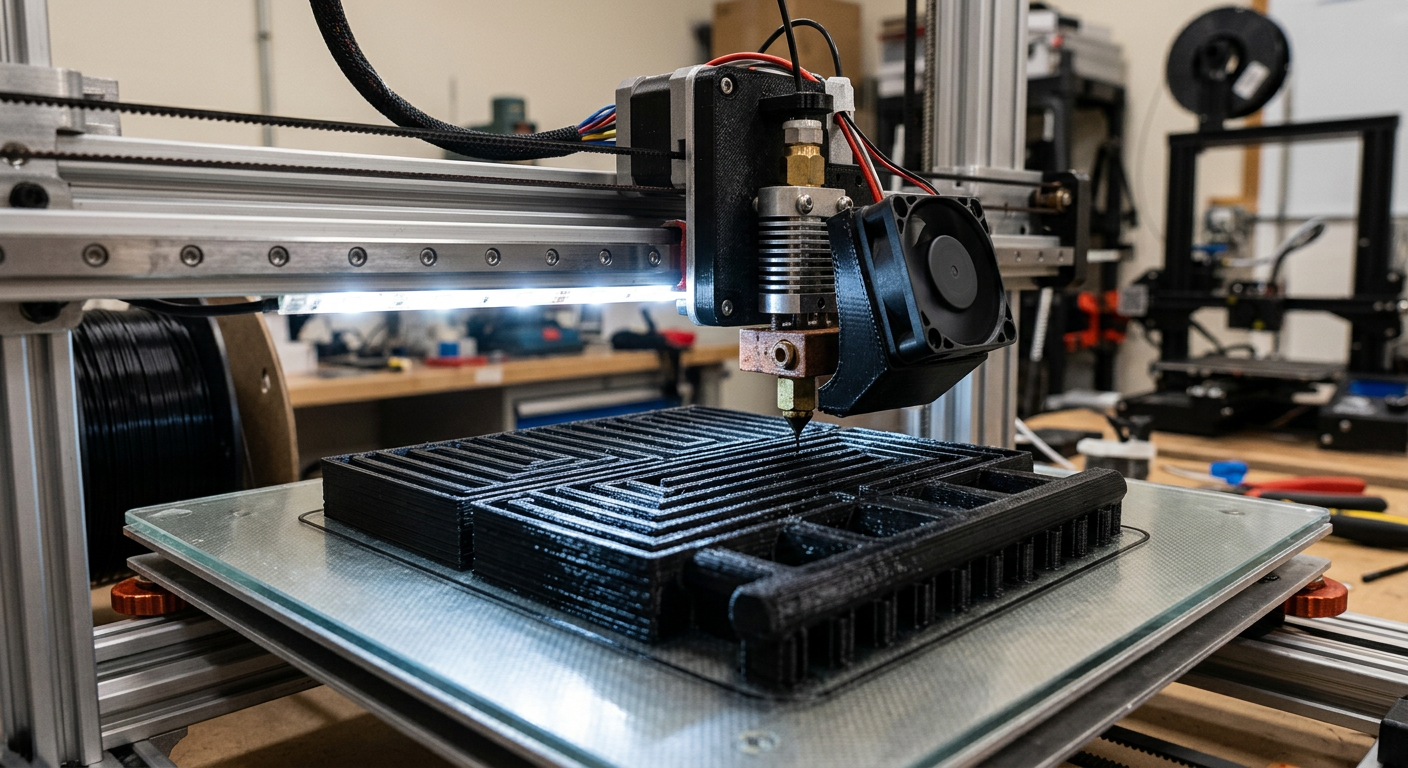
Concentrated solar power (CSP) requires precise optical geometry — parabolic dish surfaces, linear Fresnel reflector arrays, and trough concentrators that must maintain < 0.1° surface deviation to focus correctly. 3D printing enables rapid iteration of dish geometry, custom focal length receivers, and secondary concentrator optics without the cost of stamped metal tooling. SLA printing at 25 µm layer height achieves the surface smoothness needed for metallization and optical-quality reflectivity. Large-format FDM (IDEX, dual-material) handles dish segments up to 1,200 mm diameter for research and pilot CSP installations.
PV System Integration Components
The balance-of-system (BOS) components in a PV installation — junction boxes, conduit penetration fittings, string combiner covers, and inverter enclosures — are often the limiting factor in non-standard installations. 3D printing provides IP65- and IP67-rated enclosures in ASA (UV-stabilized) for outdoor exposure, custom conduit routing fittings for rooftop penetrations, and DIN-rail mounting adapters for non-standard inverter placement. Custom geometry is particularly valuable for BIPV (building-integrated PV) applications where components must match architectural profiles exactly.
Rapid-Deploy Off-Grid Systems
Off-grid and emergency solar deployments require lightweight, packable mounting systems that can be assembled by non-specialists in the field. 3D printed modular mounting frames, panel angle adjusters, and quick-connect fittings reduce pack weight versus welded steel alternatives by 60–70% using SLS nylon or carbon-fiber-reinforced filament. Snap-fit assembly eliminates tools. Applications include disaster response power stations, remote weather monitoring arrays, agricultural IoT sensor networks, and expedition power systems.